
Key takeaways
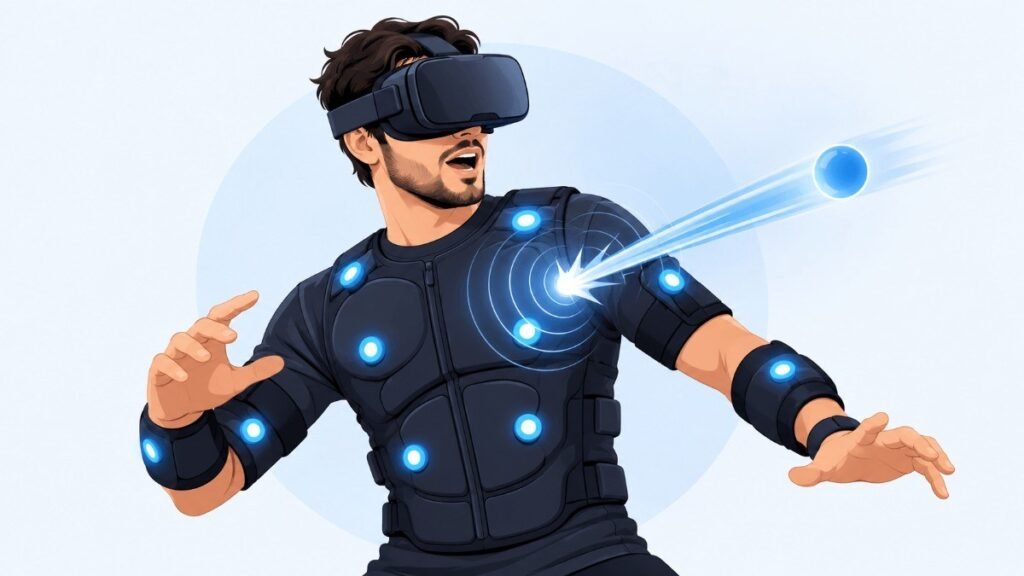
- A VR haptic suit turns game events into touch using vibration motors, electrical pulses or both.
- Vibration vests add presence and direction cues. They do not fake real force.
- Electrical suits feel stronger but carry medical limits, including no use with pacemakers or implants.
- Research shows the biggest gains come from true force feedback, not vibration.
- Buy a vest only after your headset, controllers and games are sorted.
Should You Buy a VR Haptic Suit?
Maybe, but only if you already own the basics. A VR haptic suit is a wearable that turns what happens in virtual reality into touch. Explosions thump, rain taps and hits sting. It does not make VR real. It makes VR feel more present.
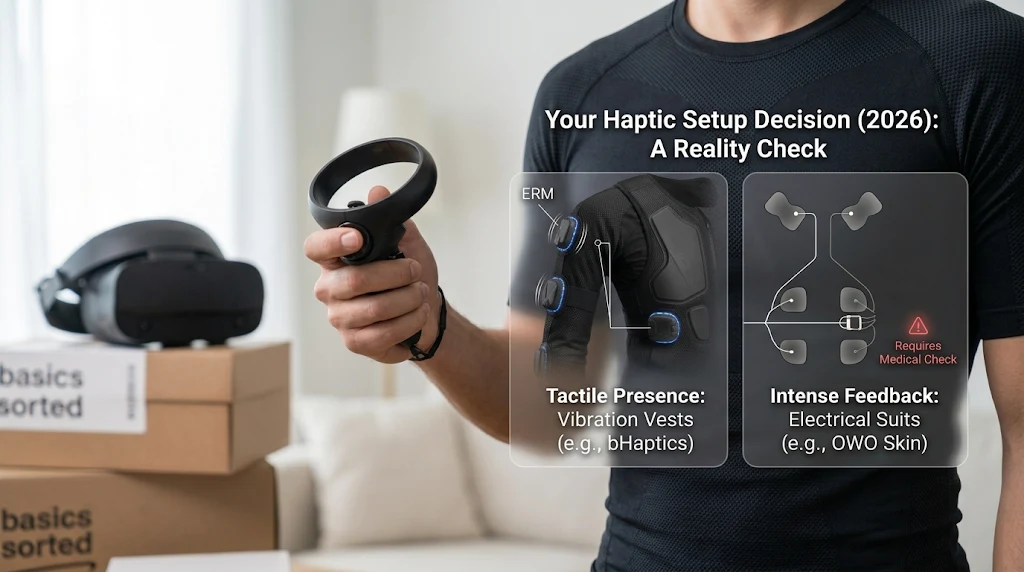
Here is how I would sort it. A vibration vest like the bHaptics TactSuit adds presence and direction for a few hundred dollars. An electrical suit like OWO Skin gives stronger sensations but has medical limits. Enterprise systems like Teslasuit are built for organizations, not living rooms.
Research adds a reality check. Vibration is a weaker stand-in for real force than most marketing admits. If you already use controllers, start with our guide to VR controllers. If you care about hands and fingers, read our haptic gloves explainer.
What Is a VR Haptic Suit?
A VR haptic suit is a wearable that gives your body touch feedback tied to events in a virtual world. Most are vests that cover the torso. A few add sleeves or cover more of the body.
Haptics comes in two types. Tactile feedback is what your skin feels, like vibration or pressure. Kinesthetic feedback, also called force feedback, is what your muscles and joints feel when something pushes back. Most suits deliver tactile cues. Few can fake real force.
A suit sits next to your headset and controllers as one more layer of immersion. For the bigger picture of what VR can do, see our guide to virtual reality experiences.
How Does a Haptic Suit Work?
Three main methods exist:
- Vibration motors. Small motors, usually eccentric rotating mass (ERM) motors, buzz at points on your torso. Software maps in-game events to certain motors, so a hit from the left shakes the left side. bHaptics works this way.
- Electrical muscle stimulation (EMS). Electrodes send small pulses that make muscles contract. That creates impacts and recoil with no moving parts. OWO Skin uses EMS across 10 muscle zones.
- Electrical stimulation with skin contact. Teslasuit combines neuromuscular electrical stimulation (NMES) and TENS through 80 channels that touch bare skin, according to this Teslasuit review. TENS is the same technology many people know from pain relief devices. It is sold to organizations.
Why does this matter? The method decides the feel, the price and the safety rules.
Which VR Haptic Suits Can You Buy in 2026?
Here are the names that matter. Lineups change often, so check the maker’s page before you buy.
bHaptics
bHaptics is the best-known consumer brand. Its newer lineup includes the TactSuit Pro (32 feedback points), the TactSuit Air (16 points) and the TactSleeve for arms. The older TactSuit X40 (40 points) and X16 (16 points) are still sold by resellers. All use ERM vibration motors.
Prices have moved. The Air launched at $249. The Pro was announced at $499, and bHaptics’ own store listed it at $565, or $509 with a 10% discount, when I checked in November 2026. Resellers list the X40 between about $419 and $529. A reseller roundup says the vests support 270+ games across Meta Quest, SteamVR and PS VR2, and the brand is part of Meta’s Made for Meta program.
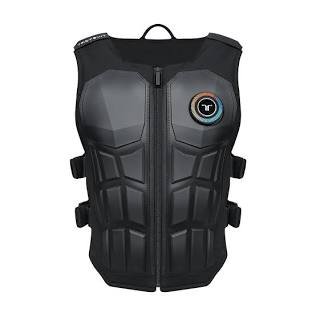
The upside is the game library and the lack of electrodes. The downside is simple: vibration only.
OWO Skin
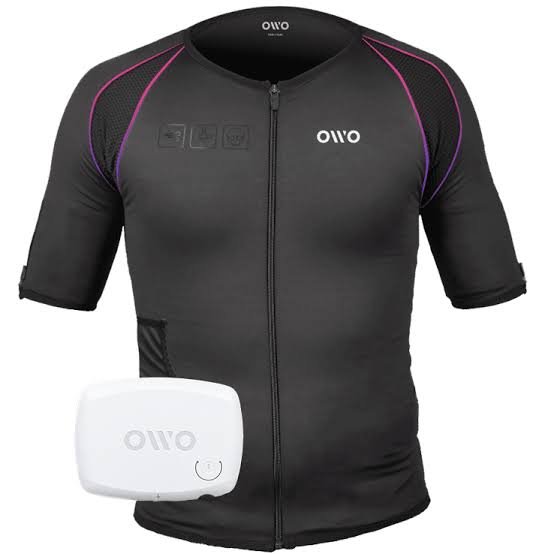
OWO is a Spanish startup that uses EMS instead of motors. One 2026 comparison lists about 349 euros for the Community Edition and 449 euros for the Original Edition. Confirm the price on the maker’s site. It feels stronger and more direct than vibration. It also has real restrictions, so read the safety section below before you add it to a cart.
Teslasuit
Teslasuit is the enterprise option. It has no public consumer price, and its 80 skin-contact channels are aimed at training, research and simulation. If you are not buying for an organization, cross it off your list.
| Suit | Technology | Feedback points | Price seen | Best for |
| bHaptics TactSuit Pro | ERM vibration | 32 | $509 to $565 | Games and arcades |
| bHaptics TactSuit Air | ERM vibration | 16 | $249 at launch | A lighter, cheaper start |
| bHaptics TactSuit X40 (older) | ERM vibration | 40 | $419 to $529 at resellers | Most feedback points |
| OWO Skin | Electrical muscle stimulation | 10 muscle zones | About 349 to 449 euros | Strong, direct sensation |
| Teslasuit | NMES and TENS | 80 channels | No public price | Enterprise and research |
Do Haptic Suits Actually Improve Training and Games?
Sometimes. It depends on the type of feedback. Here is what research shows:
- Force beats vibration. A meta-analysis of 58 studies with 1,104 participants looked at haptic feedback in teleoperation and telesurgery systems. Those are not VR, but they are close cousins. True force feedback improved task performance, with effect sizes of 0.62 to 0.75. Vibration used as a stand-in had a much smaller effect of 0.21.
- Surgical simulators. A systematic review of eight randomized trials found six where VR with haptics beat training without it. Two showed no difference.
- Direction cues. A 2008 study in Presence found vibration on the arm improved navigation in a virtual confined space compared with visual cues alone.
- Vests as guides. A 2024 study used the X40’s 40 motors to give directional cues. The authors called the results preliminary because the group was small.
What should you take from this? Vests help most with direction and presence. They do not replace real force. For hand skills, gloves matter more. For workplace use, see our guide to VR safety training. For factories, see virtual reality in manufacturing, where one lab study of haptic-enabled assembly training reported large gains.
Are VR Haptic Suits Safe?
It depends on the technology, so check before you buy.
Vibration vests are sold for home use, but every maker publishes safety guidance. Read it. Electrical suits are different. OWO’s own user manual says not to use the Skin with a pacemaker, metal implants or other implanted electronic devices. The company also says it is meant for adults, warns about pregnancy, notes that long-term effects of repeated electrical stimulation are unknown, and says it is not a medical device.
A quick safety check:
- Pacemaker or implant? Skip electrical suits and ask your doctor.
- Pregnant or under 18? Skip electrical suits.
- Any medical condition? Ask your doctor first.
This is not medical advice.
Haptic Suits vs Haptic Gloves: Which Do You Need?
They solve different problems:
- Suits give body-wide cues such as hits, direction, rain and recoil. Pick one for immersion.
- Gloves target hands and fingers, and some add real force feedback. Pick them for precise tasks.
Most people should choose one based on what they do in VR. Our haptic gloves guide goes deep on the hand side.
Where Else Are Haptic Suits Used?
- Arcades and demo spaces. Road to VR noted that the X40 appeared to take over much of the job of bHaptics’ enterprise Tactot vest, so one product covers home and out-of-home use. See our guide to VR arcades.
- Defense training. OWO has raised funding to bring its haptics to defense training.
- Workplace safety and factories. Touch cues are being tested for rehearsing hazards like confined spaces. The evidence is early.
Who Should Buy a VR Haptic Suit?
Buy one if:
- You already play games that support it and want more presence.
- You run an arcade or demo space where reactions sell the experience.
- You are happy to read the maker’s safety guide.
Skip one if:
- You want precise hand feedback. Look at gloves instead.
- You have a pacemaker or implant, or you are pregnant or under 18 and the suit uses electrical stimulation.
- You have not yet upgraded the basics. A better headset or controllers usually add more than a vest.
Final Thoughts
A VR haptic suit is a luxury layer, not a requirement. Vibration vests add presence and direction at a few hundred dollars. Electrical suits go further but come with medical limits. Enterprise suits belong in organizations with a clear training goal.
My take: spend on the headset and games first. Add touch when you already know what you want it to do.
Frequently Asked Questions
Do haptic suits work with games that do not support them?
- Yes, through audio-to-haptic. The vest turns game sound into vibration.
- The wired 3.5mm connection supports stereo (two channels) only.
- SteamVR also has mod support for some games, and native support still gives the best results.
Which headsets work with bHaptics vests?
According to bHaptics’ product pages, Meta Quest 3, 3S and 2 work with native support or wired audio-to-haptic. SteamVR headsets work with native or mod support plus wireless audio-to-haptic. PS VR2 works with native support and wired audio-to-haptic. I found no official statement about Steam Frame support, so check bHaptics’ compatibility list before you buy for it.
How long does the battery last?
- Road to VR lists rated playtime of 13.5 hours for the Pro and 12 hours for the Air. Ratings come with the maker’s fine print.
- The older X40 was rated for 18 hours.
- Real play can be shorter, so charge before long sessions.
Are haptic suits okay for kids?
OWO says its electrical suit is for adults. For vibration vests, follow the maker’s age and fit guidance and supervise younger players.
Is there a cheaper way to feel haptics?
Yes. Controllers already rumble, and some add adaptive triggers. bHaptics also sells the TactSleeve for arms at a lower price than the vests. Our guide to VR controllers shows what you get without a vest, and our VR category has more hardware coverage.
How We Researched This Article
I read bHaptics’ product pages and Road to VR’s coverage, OWO’s user manual, a Teslasuit review, a haptics meta-analysis, a systematic review of haptics in surgical simulation and the Presence study. Prices come from store pages and reseller listings seen in November 2026, so treat them as snapshots. I did not test these suits.
About the Author
Aamir Khan is a content strategist and senior editor. He founded Future of Virtual Reality, a site about VR and spatial computing, and he researches and edits each guide against primary sources where possible.
Editorial Note
Companies and products named here are examples from public sources, not endorsements. This article is general information, not medical advice. Found a mistake? Tell us on our contact page and we will fix it and note the change.