
Virtual Reality in Education
VR technology has the ability to greatly transform the way education has delivered at the moment. By engaging students in a simulated environment, VR allows for hands-on learning and engagement in a way that traditional classroom instruction cannot match.
What is Virtual Reality in Education?
Virtual reality in education refers to the use of VR technology to enhance learning aptitude. This can include simulations, virtual field trips, and interactive lessons. Virtual Reality helps in designing courses and curricula to engage students and make learning more interactive and immersive.
Benefits of Virtual Reality in Education
There are several benefits of using a VR platform in the classroom, including:
- Increased engagement and motivation for students
- Hands-on learning opportunities
- The ability to explore and experience new environments and situations in a safe and controlled way
- Improved retention of information
- Access to resources and experiences that may not be available in the physical world
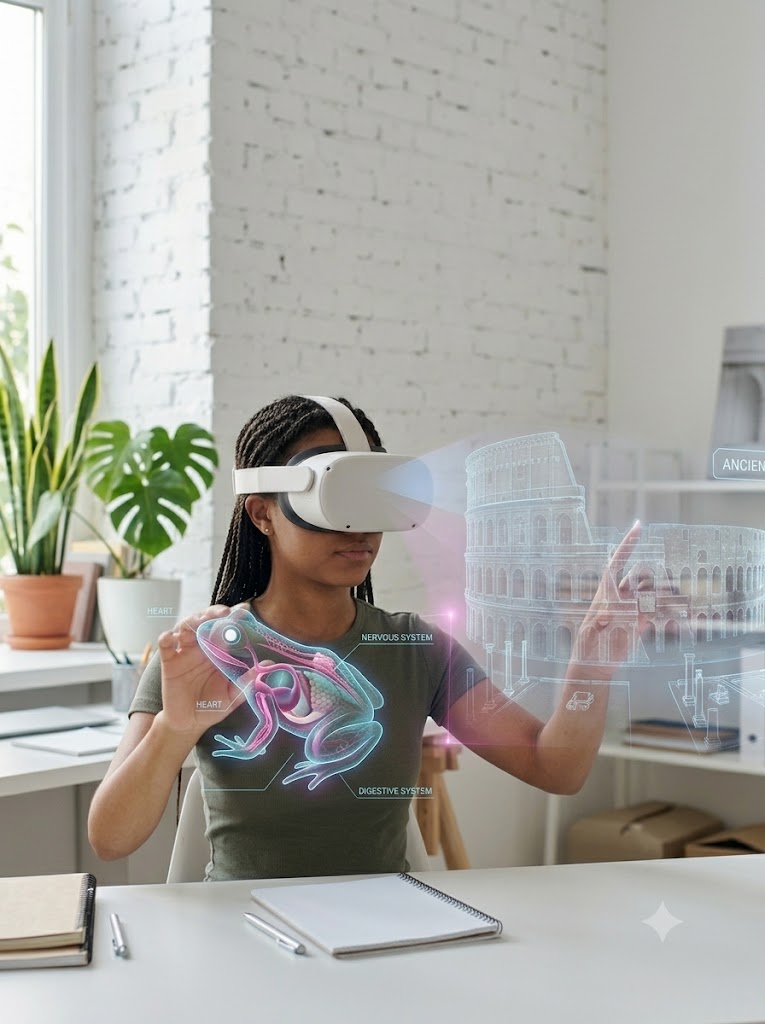
Common Applications of VR in Education, With Real Examples
Science and Biology
Labster is currently used by more than 700 universities worldwide for virtual science labs, letting students run experiments in biology, chemistry, physics, and engineering that would otherwise require expensive equipment or scarce lab time. Research comparing Labster’s outcomes to traditional in-person labs has found comparable conceptual learning, and in some cases better preparation for physical lab work because students have already rehearsed the procedure once in a lower-stakes setting.
History and Social Studies
Virtual field trips let students walk through the ruins of Pompeii or stand inside the Sistine Chapel without leaving the classroom. Google’s Expeditions app pioneered this for schools before it was discontinued in 2021, and much of that demand has since moved to dedicated platforms such as ClassVR, which now offers curriculum-aligned historical site tours as part of its standard content library.
Language Learning
Instead of practicing dialogue from a textbook, students in a VR language environment can order food from a virtual vendor in Paris or ask for directions on a simulated street in Tokyo. The immersive setting adds a layer of real-world pressure and context that a classroom role-play exercise cannot fully replicate.
Special Education
Because a VR environment can be controlled precisely, teachers working with autistic students or students with sensory processing differences can adjust lighting, sound, and pacing to match what an individual student can comfortably handle. This level of control is difficult to achieve in a physical classroom shared by 25 other students.
Vocational and Technical Training
Iowa State University found that welding students who trained using VR simulations performed better on subsequent weld testing than students trained using traditional methods alone, with the VR group showing a marked improvement in technique before ever picking up a real welding torch. Similar simulation-based approaches are now used for automotive repair and medical procedure training, where mistakes in the real world are costly or dangerous.
For a broader look at where this technology is heading beyond the classroom, visit the Future of Virtual Reality homepage.

Challenges and Limitations of VR Technology
While VR technology has the potential to revolutionize education, there are also challenges and limitations to its implementation. These include the cost of the equipment, the need for specialized training for educators, and the potential for motion sickness and other health issues.
By giving students engaging and immersive learning opportunities, VR has the potential to transform the way we think about education. Besides limitations, the benefits of VR in education make it worth exploring as a viable option for the future.
Is Virtual Reality Effective for Learning? What the Research Says
This is the question every school administrator asks before approving a VR budget, and the research base has grown solid enough to give a real answer.
- 4x faster training completion than classroom learning, per a PwC study on VR training effectiveness
- 3.75x more emotional connection to material compared to traditional classroom learners
- 275% higher confidence applying what was learned, versus classroom-only training
- 40% scored 10%+ higher on recall tests, per a University of Maryland study comparing VR to a standard desktop display
- Strongest evidence base comes from higher education and corporate training, K-12 data is still developing
- Best fit: subjects involving spatial reasoning, procedural skills, or high-risk practice see the clearest measurable gains
VR isn’t a guaranteed upgrade for every lesson, but where hands-on or spatial learning matters, the research consistently backs it up.
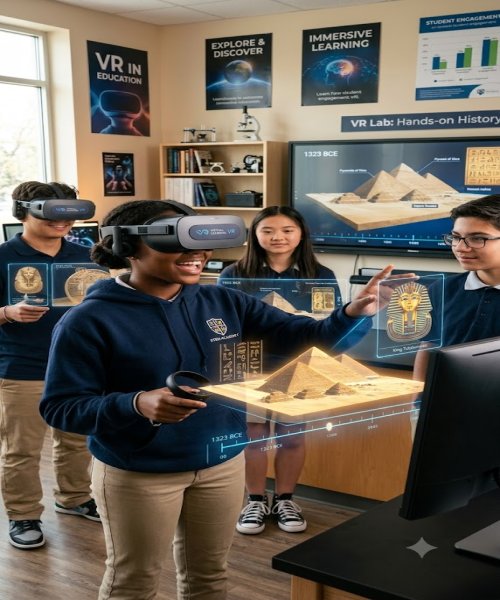
Although VR technology has been available for a while, the sector of education has just recently embraced it. It allows for immersive, interactive experiences that can enhance learning and engagement for students.
Current Developments
Distance Learning
Vocational Training
Science and Mathematics
Language Learning
Special Persons
Future Trends
Personalized Learning
Collaborative Learning
Augmented Reality
Gamification
As VR technology continues to advance, it will play an increasingly important role in education. This will provide students with the opportunity for deep and engaging learning experiences that will improve their understanding of difficult ideas. However, it is important to note that the use of VR in education should be balanced with other forms of teaching and learning. Moreover, it should be used as a supplement, not a replacement, for traditional forms of education.
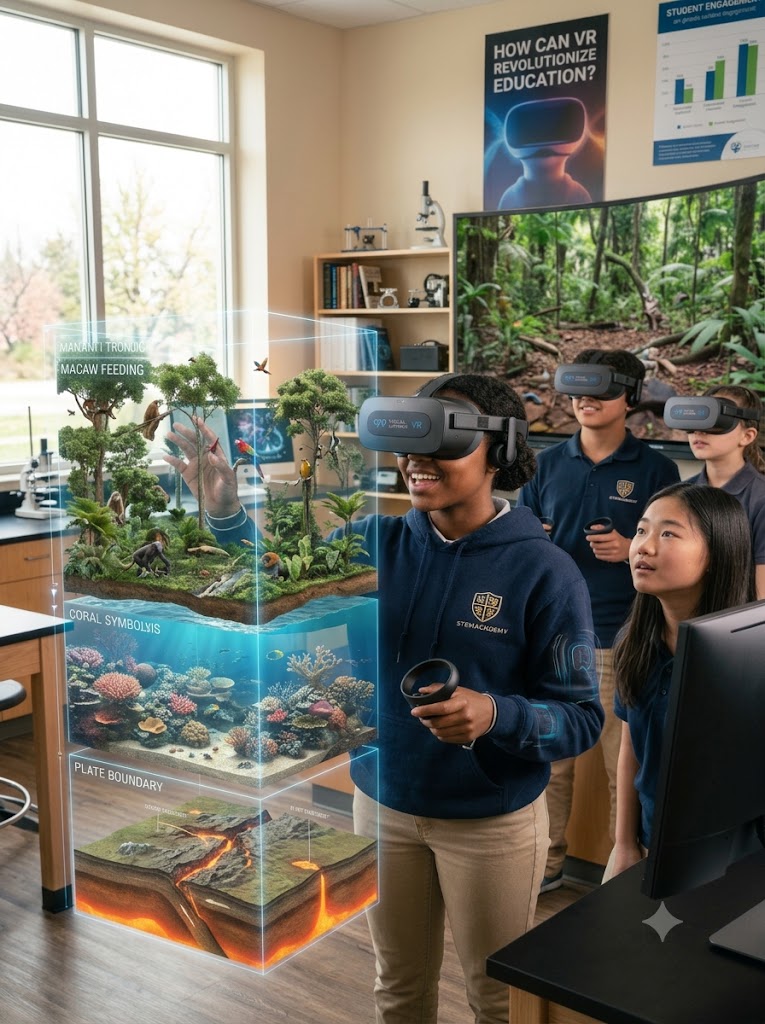
How can VR revolutionize the education industry?
Education in virtual reality gives students access to simulations and environments that would be difficult or impossible to recreate in a traditional classroom, from dissecting a virtual frog to walking through ancient Rome. Combined with the research on retention and engagement covered above, this is what makes virtual reality education one of the few technologies genuinely capable of changing how students learn, not just what they see on a screen.
The bigger shift is accessibility. A rural student without a fully equipped science lab, or a remote learner unable to attend class in person, can now get the same hands-on experience as a student anywhere else with a headset. As cost barriers continue to fall, that gap between virtual reality and education access is only going to close further.
VR won’t replace teachers or traditional instruction, and it shouldn’t try to. Used well, it’s a powerful supplement, one that turns passive learning in virtual reality into something students actively experience.
Finally, VR has the POWER to significantly enhance the effectiveness and accessibility of education for all students regardless of race, IQ, gender, Needs, and location.