
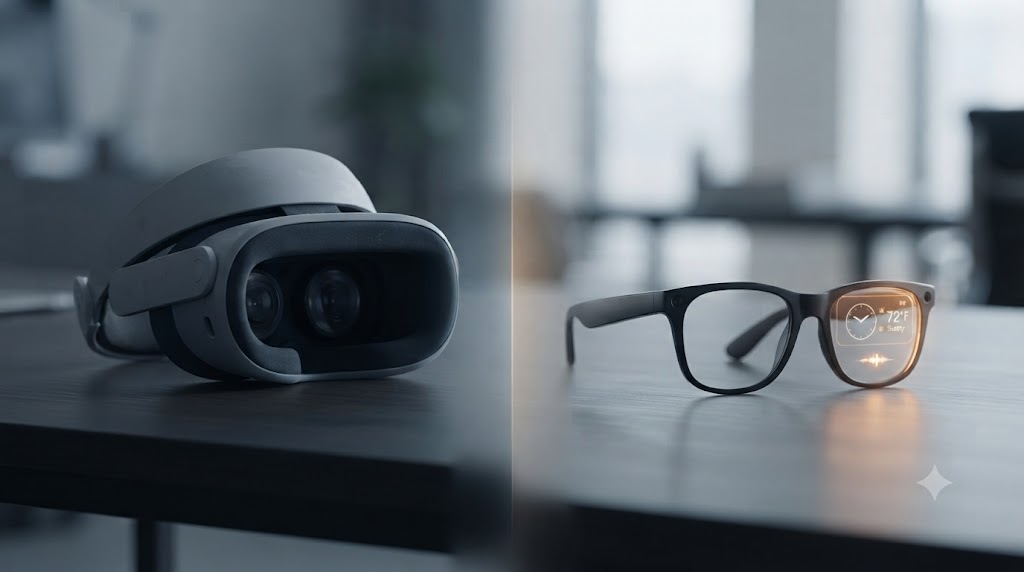
You have probably typed “what happened to the metaverse” into Google at some point this year. Maybe you remember 2021, when Zuckerberg stood on a stage and promised a billion people would live, work, and shop inside a shared virtual world. Then the headlines went quiet. So what actually happened?
Here is the short answer, no fluff. The metaverse, as Meta originally pitched it, did not survive. But the technology underneath it did not die either. It changed shape, changed strategy, and changed hardware. Stick with us, because the real story is more interesting than a simple yes or no.
What Happened to the Metaverse? The Short Answer
Let’s clear this up first, because the confusion is real. In late 2021, Facebook renamed itself Meta and poured its future into a single bet: persistent, social, 3D virtual worlds accessed through VR headsets. That specific vision, Zuckerberg’s version, has effectively collapsed. Reality Labs, the division built to deliver it, has lost more money than almost any consumer tech bet in history and has now pivoted most of its investment toward AI glasses and wearables instead of headsets.
However, and this is the part most headlines skip, the broader idea of spatial, immersive computing did not go anywhere. It just stopped wearing the word “metaverse” as a name tag. Apple calls it spatial computing. Google calls it Android XR. Meta itself now talks about AI glasses more than virtual worlds. The concept moved. The marketing term got left behind.
Read that again if you need to, because it matters for everything that follows: the metaverse as a brand is fading, but the technology stack behind it is still very much alive and still growing in a different direction.
Is the Metaverse Dead? Here’s What the Numbers Say
Let’s not argue about feelings. Let’s look at the money, because money never lies the way marketing does.
Since 2021, Meta’s Reality Labs division has lost roughly $83.5 billion across 21 straight quarters, an average of about $4 billion every three months, according to CNBC’s reporting on Meta’s Q1 2026 earnings. In 2025 alone, the unit burned through about $19.2 billion, and Q4 2025 delivered a $6.02 billion loss on its own, per CNBC. Q1 2026 wasn’t much better: another $4 billion in losses against just $402 million in revenue.
| Period | Operating Loss | Revenue |
| Full Year 2025 | $19.2 billion | ~$2.2 billion |
| Q4 2025 | $6.02 billion | $955 million |
| Q1 2026 | ~$4.03 billion | $402 million |
| Cumulative (2021 to Q1 2026, 21 quarters) | ~$83.5 billion | N/A |
Think about that gap for a second. Four billion out, four hundred million in. That is not a rounding error. That is a business model that has not worked, not yet, and Meta’s own CFO Susan Li admitted the company is still figuring out its long-term plan on the earnings call.
The layoffs tell the same story. In January 2026, Meta cut more than 1,000 Reality Labs employees, shuttered internal VR studios including Ouro Interactive, and retired Workrooms, its VR meeting app for businesses, as TechCrunch reported at the time. Global VR headset shipments fell for a third straight year in 2024, and Quest sales alone dropped 16% year over year in 2025.
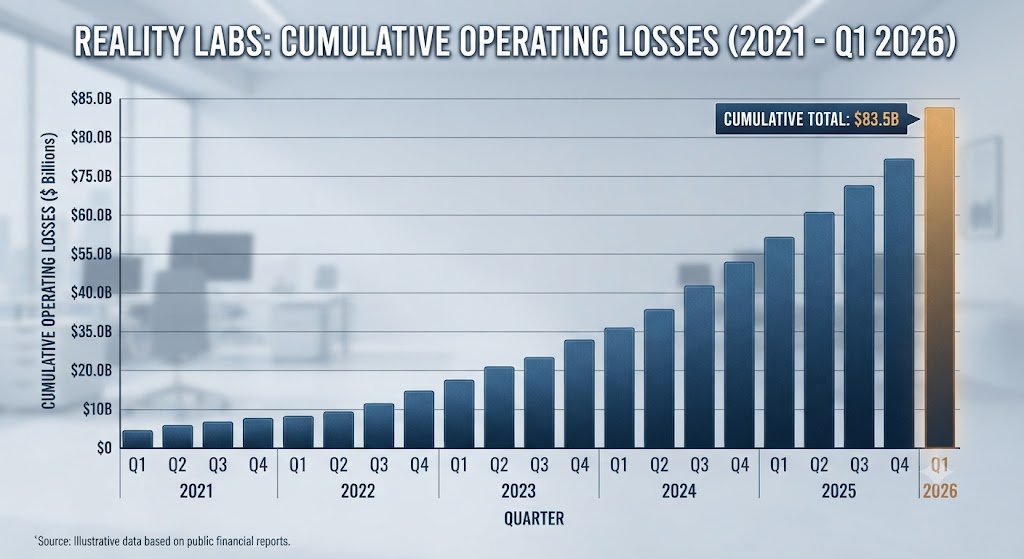
So is the metaverse dead? By the original definition, mostly yes. By the technology that powers it, not even close. Keep reading, because what happened next is where this story gets genuinely dramatic.
Horizon Worlds: Zuckerberg’s Billion-User Dream vs. Reality
Horizon Worlds was supposed to be the proof that the metaverse worked. It was Meta’s flagship social VR app, the digital town square Zuckerberg promised would eventually hold a billion people.
It never got close. At its peak in early 2022, Horizon Worlds had roughly 200,000 monthly active users, well short of even Meta’s internal, already-lowered target of 280,000, according to reporting cited by Boing Boing. Even avatars launched without legs. The platform became something of a punchline before it ever found its footing.
Then, in March 2026, the story took a genuinely wild turn. On March 18, Meta emailed Horizon Worlds users to say the VR version was shutting down entirely by June 15, pushing the platform to mobile only. Creators were furious. Then, just one day later on March 19, Meta reversed the decision. Andrew Bosworth, Meta’s CTO, announced on Instagram that Quest support would continue after all.
Why the sudden flip? Look at the mobile numbers. Appfigures data reported by Glass Almanac showed Horizon Worlds hit 45 million total downloads with a 53% year-over-year jump in early 2026, almost entirely driven by the mobile app, not VR. Meta was not saving Horizon Worlds because VR was thriving. It was hedging its bets while mobile quietly became the platform’s actual growth engine.
That single week captures the whole “is it dead or pivoting” debate in miniature. Meta tried to bury the VR version, backed off under pressure and better mobile data, and kept both alive while clearly betting its future on something else entirely. What is that something else? Glasses.
The Pivot Nobody Saw Coming: Metaverse to AI Glasses
Here’s the twist that most people missed while they were busy writing metaverse obituaries. While VR headset sales stalled, Meta’s Ray-Ban smart glasses quietly became the one Reality Labs product that actually worked.
Sales of Ray-Ban Meta glasses tripled in 2025. During Meta’s Q1 2026 earnings call, Zuckerberg confirmed the company is now directing most of its Reality Labs investment toward glasses and wearables, not headsets, according to VR.org’s coverage of the call. Counterpoint Research had Meta holding 57% of the entire XR headset market in late 2025, and yet the smart glasses category, not headsets, is where actual unit growth is happening.
| Metric | VR Headsets (Quest) | AI Glasses (Ray-Ban Meta) |
| 2025 sales trend | Down 16% year over year | Sales tripled |
| Hardware revenue | Overtaken by glasses | ~$2.15 billion, exceeded Quest for the first time |
| Meta’s 2026 investment focus | Scaling back | Primary Reality Labs priority |
| XR headset market share (late 2025) | 57% (Counterpoint) | Fastest-growing category |
Our own history of VR timeline tracks this shift in more detail: Ray-Ban Meta glasses sold over 2 million units with sales tripling in a single quarter, generating an estimated $2.15 billion in hardware revenue and, for the first time, out-earning Meta’s own Quest headsets. That is not a footnote. That is the pivot, in one sentence.
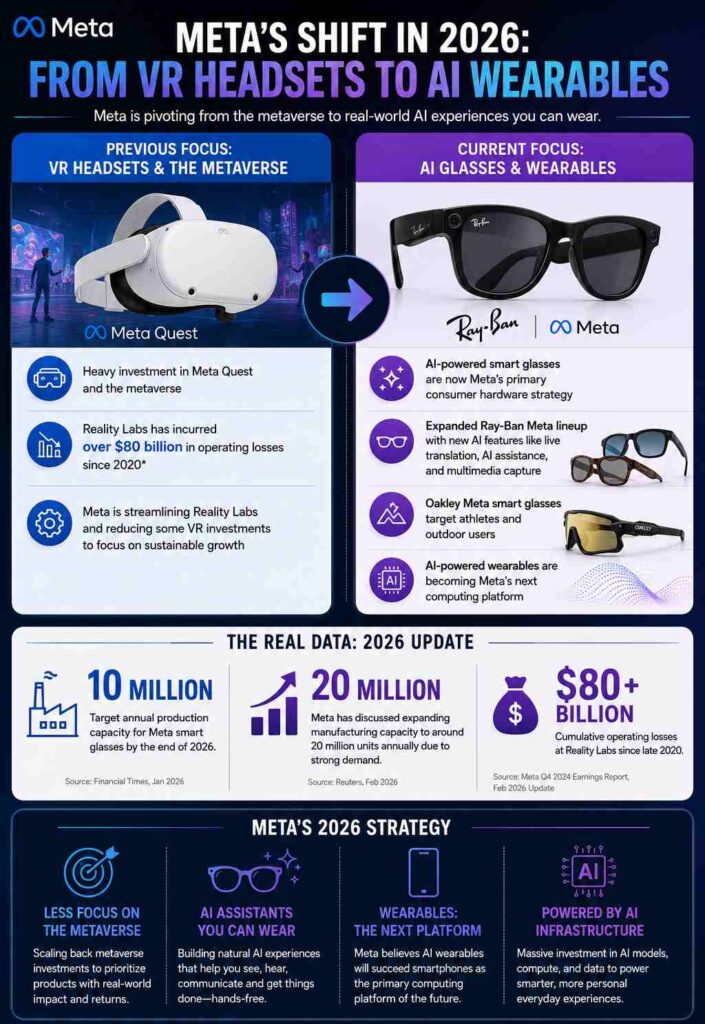
This is also exactly why we built out our AI and VR convergence coverage earlier this year. The metaverse did not disappear so much as it merged with AI and shrank down from a headset you strap to your face to a pair of glasses you barely notice you’re wearing. If you want to understand where immersive tech is actually headed next, glasses are a far better place to look than virtual worlds right now.
So, Is the Metaverse Dead, Pivoting, or Just Getting Started?
Pick a lane, right? Here is ours, based on everything above.
Dead: the specific vision Zuckerberg sold in 2021, a headset-first, billion-user virtual social world. That vision is functionally over. The financials do not lie, and Meta’s own strategy shift confirms it.
Pivoting: the underlying technology. Spatial computing, 3D interaction, persistent digital environments. That did not die, it moved house. It now lives inside Apple’s spatial computing framing, inside Android XR, and increasingly, inside a pair of glasses instead of a headset. Our spatial computing 2026 guide breaks down exactly how that shift is playing out across the industry.
Just getting started: honestly, this might be the most accurate label of all, just not for the reason Zuckerberg originally pitched. Immersive computing, broadly defined, is still early. It is simply arriving through a different device, funded by a different business model, and marketed under a different name.
Bottom Line
The metaverse, as a marketing term and as Meta’s original billion-user vision, is dead. Do not let anyone tell you otherwise; $83 billion in losses and a platform that peaked at 200,000 users make that case on their own. But do not mistake a failed brand for a failed technology. Spatial computing, immersive AI, and now AI glasses are all direct descendants of the same idea, and they are growing exactly where the metaverse could not.
If you are trying to decide what to pay attention to in 2026, stop watching for the metaverse’s comeback. Watch the glasses instead. That is where the real story is happening now.
Frequently Asked Questions
Is Meta shutting down the metaverse completely?
No. Meta reversed its planned Horizon Worlds VR shutdown within 48 hours in March 2026 after a surge in mobile downloads. Reality Labs is scaling back VR investment, not eliminating it, while shifting most new spending toward AI glasses.
What happened to Horizon Worlds specifically?
- Peaked at around 200,000 monthly active users in 2022, well below Meta’s internal targets
- Meta announced a full VR shutdown on March 18, 2026
- Reversed that decision on March 19, 2026 after mobile downloads hit 45 million with 53% year-over-year growth
Are VR headset sales still growing in 2026?
Not much. Global VR headset shipments fell for a third consecutive year in 2024, and Quest sales specifically dropped 16% year over year in 2025. Growth in the XR hardware category is now coming almost entirely from smart glasses, not headsets.
Is the metaverse the same thing as spatial computing?
Not exactly. The metaverse was Meta’s specific branded vision built around VR headsets and virtual worlds. Spatial computing is the broader technology category, covering any system where digital content interacts with physical space, and it includes VR, AR, and mixed reality devices from multiple companies, not just Meta.
Will AI glasses replace VR headsets?
Further Reading
- ALM Corp, the full story behind Reality Labs’ $83.6B in losses
https://almcorp.com/blog/meta-horizon-worlds-vr-shutdown-reality-labs-losses/ - DesignRush, Meta reverses the Horizon Worlds VR shutdown
https://news.designrush.com/meta-horizon-worlds-vr-reversal-reality-labs-losses - Baptista Research, Meta’s 2026 Reality Labs layoffs and reset
https://baptistaresearch.com/meta-metaverse-layoffs-2026-reality-labs-reset-losses/ - Barchart, Meta resets Reality Labs priorities
https://www.barchart.com/story/news/225071/meta-resets-reality-labs-grows-message-sales-as-ad-engine-roars