
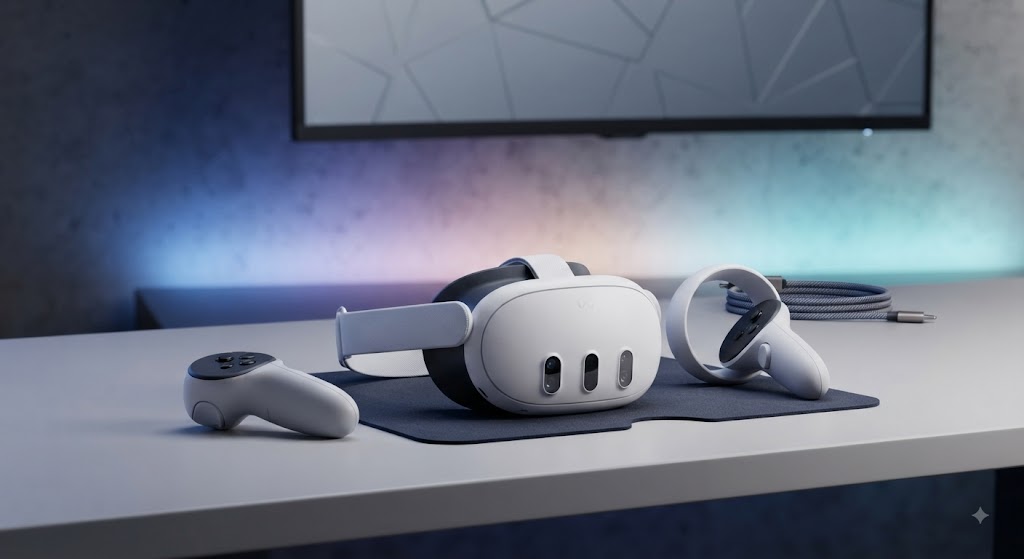
Cheap VR headsets used to mean cheap VR experiences too. That stopped being true around 2024, and most buying advice hasn’t caught up. Right now, the same chip powering a $599 headset also powers one that costs $299, which means “budget” no longer means “worse,” it mostly means fewer pixels and a shorter warranty.
If you want the one-line answer: get the Meta Quest 3S. It’s $299, needs nothing else to work, and runs the same library as headsets twice its price. Everything below explains when that answer changes, and which cheap headsets to walk straight past.
The $299 Headset Nearly Everyone Should Start With
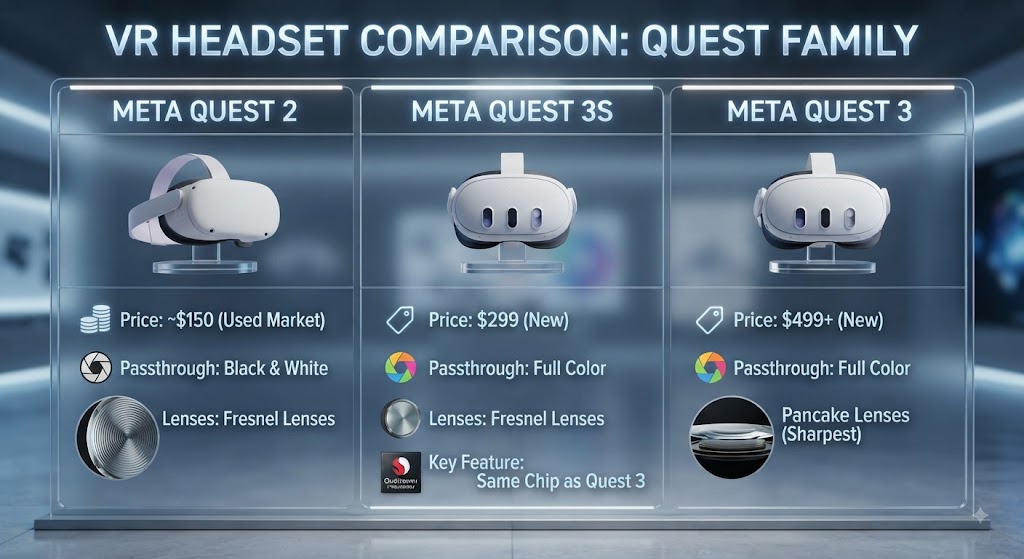
The Quest 3S runs the exact same Snapdragon XR2 Gen 2 chip as the pricier Quest 3, which is the part most budget buyers don’t expect. Meta didn’t cut the processor to hit the lower price, they cut the lenses instead, swapping the Quest 3’s sharper pancake optics for older Fresnel lenses.
That tradeoff matters more in theory than in practice for most people. One long-term owner’s honest 2026 review on Space4Games, written after more than a year with the headset, put it plainly: for casual users it’s an acceptable compromise, but anyone sensitive to lens flare, blur, or motion sickness, or planning to push PC VR seriously, should spend the extra $300 on the Quest 3 instead. That’s a fair trade description, not a sales pitch, and it’s worth sitting with before you buy.
What You Actually Get for $299
Controllers are included, and they’re not the cut-down version you might expect from a budget model. The Quest 3S ships with the same Touch Plus controllers as the full Quest 3, according to Meta’s own product announcement coverage, which also confirms the same 8GB of RAM and full mixed-reality passthrough support carries over from the pricier model. You’re genuinely not buying a stripped-down toy here, you’re buying the same brain in a cheaper body.
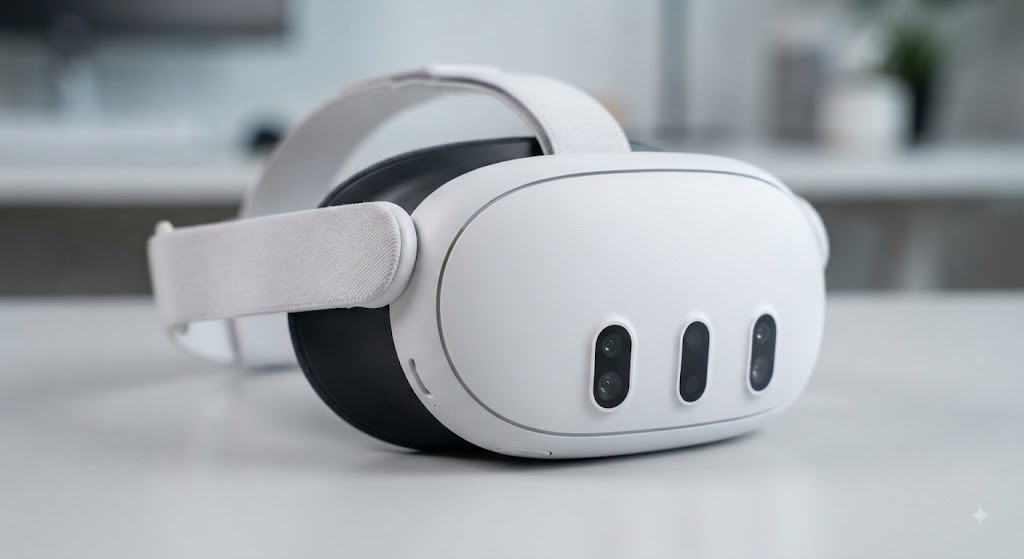
The real limitation shows up in daily use, not on the spec sheet. Battery life sits around two to three hours, which is short enough that a second charging session mid-weekend isn’t unusual for anyone playing regularly.
If $299 Still Feels Like Too Much
Two paths exist below that price, and they are not equally good ideas.
A used or renewed Quest 2 is the one that still makes sense. According to VR.org’s dedicated 2026 budget headset guide, a second-hand Quest 2 runs around $150, roughly half the Quest 3S. It still plays the vast majority of the Quest library. What it doesn’t do well is mixed reality, its passthrough cameras are black and white, which makes blending real and virtual environments look more like a security camera feed than anything usable. If you only care about full VR games and not the mixed-reality features, that limitation barely matters. If MR is part of the appeal, it matters a lot.
Phone-based or sub-$50 viewers are the path to skip. VR.org’s testing flagged a specific trap worth knowing about by name: the XREAL A01 Plus, priced at $299, fifty dollars under the Quest 3S, and marketed hard during its July launch. It’s a genuinely competent product for watching video on a plane. It plays zero VR games. Anyone buying it expecting a cheaper VR headset is buying the wrong category of device entirely, not a budget version of the right one.
The Used Market Math
Buying secondhand stretches a VR budget further than almost any other tactic on this list, but it comes with real friction if you skip the basics. A used Quest 3 typically runs around $400 (still cheaper than a new one), and a used Quest 2 around $150, according to VR.org’s pricing breakdown. Before handing over money for either, confirm two things: the headset has been factory reset and fully unlinked from the previous owner’s Meta account, and you’re buying through a platform that offers some form of buyer protection rather than an unmonitored local listing.
Skip either check and you risk a headset that’s still locked to someone else’s account, which no amount of factory resetting on your end can undo without the seller’s cooperation.
What About PlayStation Owners?
If you already own a PS5, the calculation changes. The PlayStation VR2 sits at $399, above the Quest 3S but with sharper OLED visuals and haptic feedback most standalone headsets at this price simply don’t offer, since it borrows the DualSense’s adaptive trigger tech through its Sense controllers. For an existing PS5 owner, that $100 premium over the Quest 3S buys a genuinely better-looking experience for console-based VR specifically, according to the same VR.org comparison. It only makes sense if the console is already in your living room. Buying a PS5 just to access PSVR2 defeats the entire point of shopping for a budget headset.
Will an Old Quest 2 Actually Run Today’s Games?
This is the question used-market shoppers skip, and it matters more than the price tag. One reviewer at CameraEgg spent 120 hours testing current budget headsets across titles including Half-Life: Alyx and Gorilla Tag, specifically checking tracking reliability and setup friction rather than just spec sheets. Their finding on the Quest 2: it still runs roughly 95% of what’s on the Meta Store without issue, years after launch. Beat Saber and Superhot VR ran, in their words, flawlessly.
The other 5% is where the age shows. New releases are increasingly tagged “Quest 3 exclusive,” meaning they lean on the newer chip’s extra processing headroom in ways the Quest 2 simply can’t match. That gap is small today and grows every year the Quest 2 stays on the market. Buying used Quest 2 hardware in 2026 is a reasonable bet on today’s library, not a guarantee against tomorrow’s.
The Real Cost Isn’t Just the Headset
A $299 sticker price is the start of the bill, not the end of it. VR.org’s pricing breakdown flags what most budget shoppers forget to plan for: a decent head strap runs $50 to $80, a carrying case another $30 to $60, and that’s before buying a single paid game. None of these are mandatory on day one, our full accessories guide covers exactly which ones are worth it and which to skip, but it’s worth knowing the true entry cost isn’t $299 if you plan to use the headset seriously rather than occasionally.
For a first VR purchase specifically, this argues for holding onto some of that budget rather than spending every dollar on the headset itself. A $299 headset with zero accessory budget left over tends to get less use than a $250 headset with $50 set aside for a comfort strap, since discomfort is the single biggest reason first headsets end up in a drawer.
A pattern worth watching for at every price point below $300: devices priced like a budget VR headset that aren’t actually built to be one. AR glasses marketed with VR-adjacent language, ultra-cheap phone viewers under $50, and clearance-priced discontinued hardware all show up in budget searches, and not all of them deliver 6DoF tracking or a real game library. If a headset’s marketing leans heavily on watching movies or browsing apps rather than playing tracked VR games, that’s usually the tell that it belongs in a different category than the one you’re shopping in.
What About Budget PC VR?
Everything so far has been standalone hardware, and that’s not an accident. “Cheap VR headset for PC” is one of the most searched versions of this question, and it’s also the one where the honest answer disappoints most people: PC VR is rarely actually cheap, even when the headset itself is.
There are genuine budget options on the hardware side. The HP Reverb G2 still turns up as a recommended pick for sim racing and flight sims specifically, with VR Eddie’s 2026 buying guide pointing out its 2160×2160 per-eye resolution punches well above its roughly $399 price class for that use case. Valve’s Index, while discontinued as new stock, still shows up at clearance pricing through some retailers and remains a capable, if aging, PC VR option for anyone who finds one.
The catch isn’t the headset price, it’s everything around it. A PC-tethered headset needs an actual gaming PC to drive it, and a machine capable of running current VR titles comfortably starts well north of $700 for anyone building or buying from scratch. If you already own a solid gaming PC, a $399 Reverb G2 genuinely is a budget entry into PC VR. If you don’t, the real cost of “budget PC VR” is the PC, not the headset, and a standalone option almost always works out cheaper overall. Our VR headset buying guide covers exactly what a PC needs to handle VR comfortably, worth checking before you shop for PC VR hardware specifically.
When Paying More Upfront Actually Saves You Money
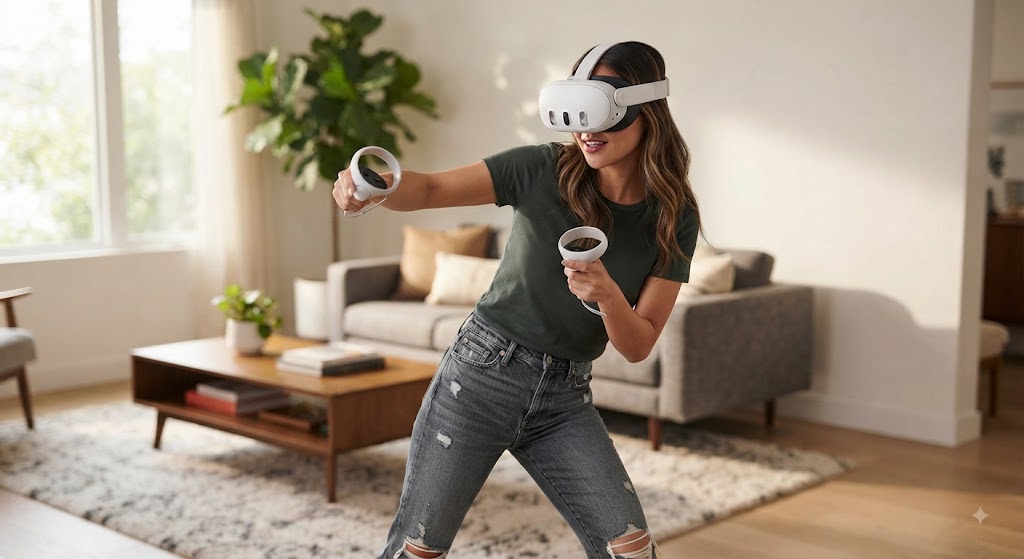
Budget advice usually stops at the purchase price, but there are a few buyer profiles where the cheaper headset quietly ends up the more expensive choice.
Anyone prone to motion sickness is the clearest case. The Quest 3S’s Fresnel lenses introduce more edge blur and glare than pancake lenses, and both are known contributors to VR discomfort for sensitive users. Paying the extra $300 for a Quest 3, or skipping straight to the sharper lenses now rather than upgrading in six months after abandoning a headset that made you queasy, is the cheaper path in practice, even though it looks like the more expensive one on the receipt.
Fitness-focused buyers are the second case. Long, sweaty sessions in apps like Supernatural put more wear on cheap or stock components, and the lens fogging issues that come up more with entry-level optics are a bigger daily annoyance during a workout than during a seated game. It’s not that budget headsets can’t handle fitness, plenty of people use a Quest 3S for exactly that, it’s that the margin for regretting a lens compromise is thinner when you’re sweating into the headset four times a week.
The through-line in both cases: budget is the right call for most first-time buyers, but “most” isn’t “everyone,” and knowing which profile you fall into before you buy is cheaper than finding out after.
Frequently Asked Questions
Is a $299 VR headset actually good, or just cheap?
For the Quest 3S specifically, genuinely good. The processor and controllers match the $599 model. The tradeoff is lens quality, not raw capability.
Should I buy used to save money?
Yes, if you confirm the headset is factory reset and unlinked from the seller’s account, and buy through a platform with buyer protection. Skipping either step is where used-market VR purchases go wrong.
Do budget headsets need a gaming PC?
No. The Quest 3S, Quest 2, and PSVR2 (with a PS5) all work as complete standalone or console-based systems with no separate PC required.
Is the Quest 2 worth buying new in 2026?
Generally no. New stock is increasingly renewed/refurbished units rather than new manufacturing, and the Quest 3S is now close enough in price to make more sense for most buyers. The Quest 2 makes the most financial sense specifically as a used purchase.
What’s the actual difference between the Quest 3S and Quest 3?
Lenses, mainly. The 3S uses older Fresnel lenses instead of the 3’s pancake lenses, meaning less sharp visuals and more edge distortion. Processor, controllers, and RAM are otherwise the same.
Is it worth waiting for prices to drop further?
Not really, based on how this market has moved. Prices have already fallen sharply from where they sat two years ago, and the bigger risk of waiting is buying into an aging model right as its successor arrives, not missing a further discount on today’s hardware.
If you’re still weighing headset types before locking in a price point, our VR headset buying guide covers that first decision. And once you’ve got a headset in hand, our guides on the best VR controllers and must-have VR accessories cover what’s actually worth adding to it.